
AI-first e-commerce that turns catalog, inventory, and campaigns into a predictable growth engine.
We design, build, and run AI layers on top of your existing store stack—improving conversions, inventory turns, and customer lifetime value without disrupting your current platforms or partners.
Where e-commerce operations quietly leak growth.
Across brands and retailers, the patterns repeat: fragmented data, manual merchandising, and campaign decisions made on lagging reports. We focus on the points that move conversion, margin, and inventory turns.
Search, recommendations, and listing logic are static. Every visitor effectively sees the same store, regardless of intent, history, or channel.
Sales, inventory, and marketing data are out of sync. Teams react late to demand spikes and promotions, and capital is locked in slow-moving SKUs.
Email, paid, and WhatsApp flows are rule-based and channel-wise. There is no single view to orchestrate journeys and offers across the lifecycle.
An AI commerce layer across your existing stack.
No rip-and-replace. We plug into Shopify, WooCommerce, custom carts, ERPs, CRMs, and marketing tools—so your teams keep their workflows, with smarter intelligence underneath.
Personalised product carousels, “frequently bought with”, and tuned search rankings based on behaviour, margins, and stock position.
Short- and mid-term forecasts by SKU, channel, and warehouse to guide purchase planning and safety stock decisions.
Guardrails and simulations for discounts and campaigns so margin and inventory don’t get destroyed in the name of “offers”.
Guided shopping, order lookup, and issue resolution via chat, tuned to your policies, logistics, and brand tone.
Clean product, customer, and event streams that power analytics, experimentation, and future AI initiatives.
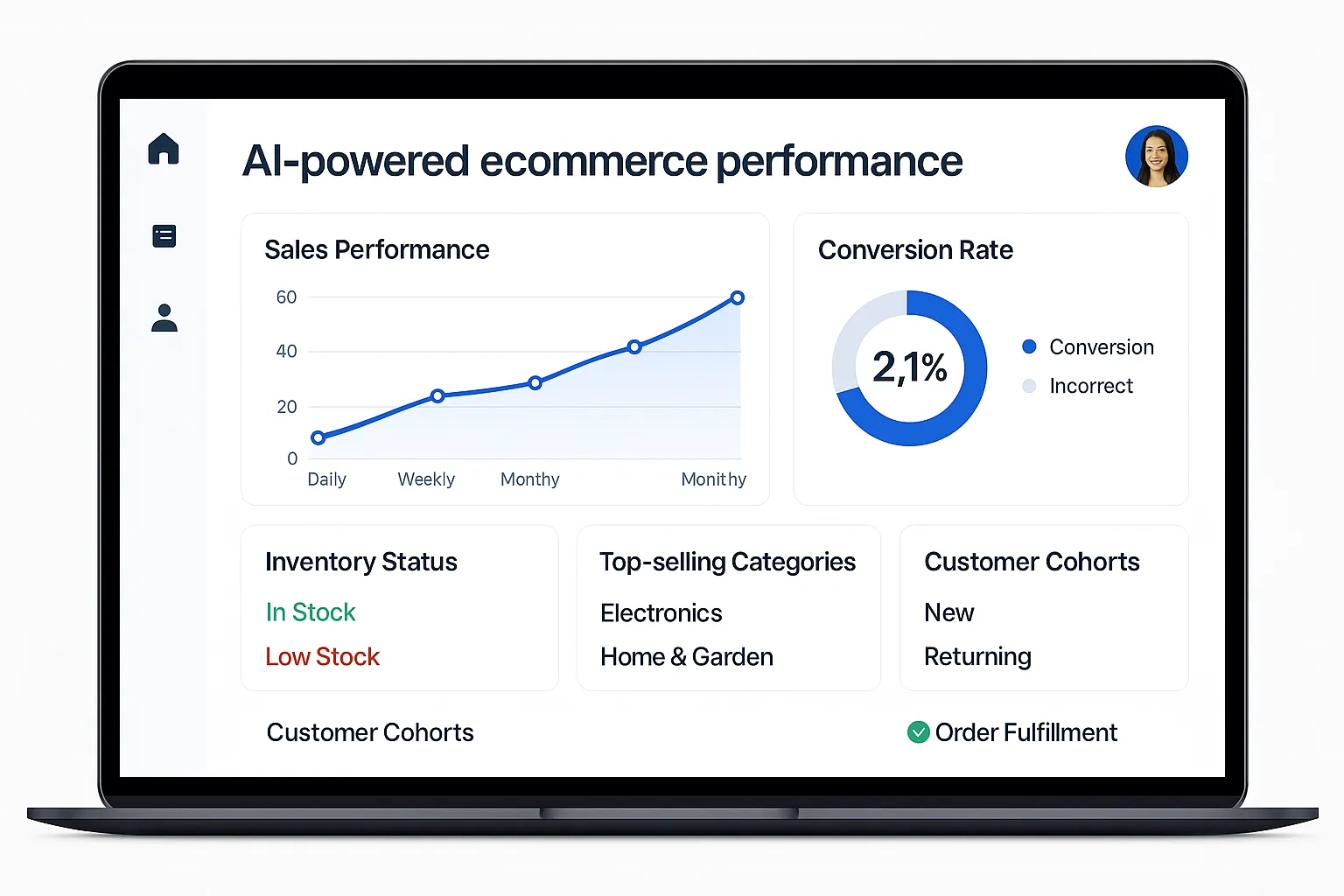
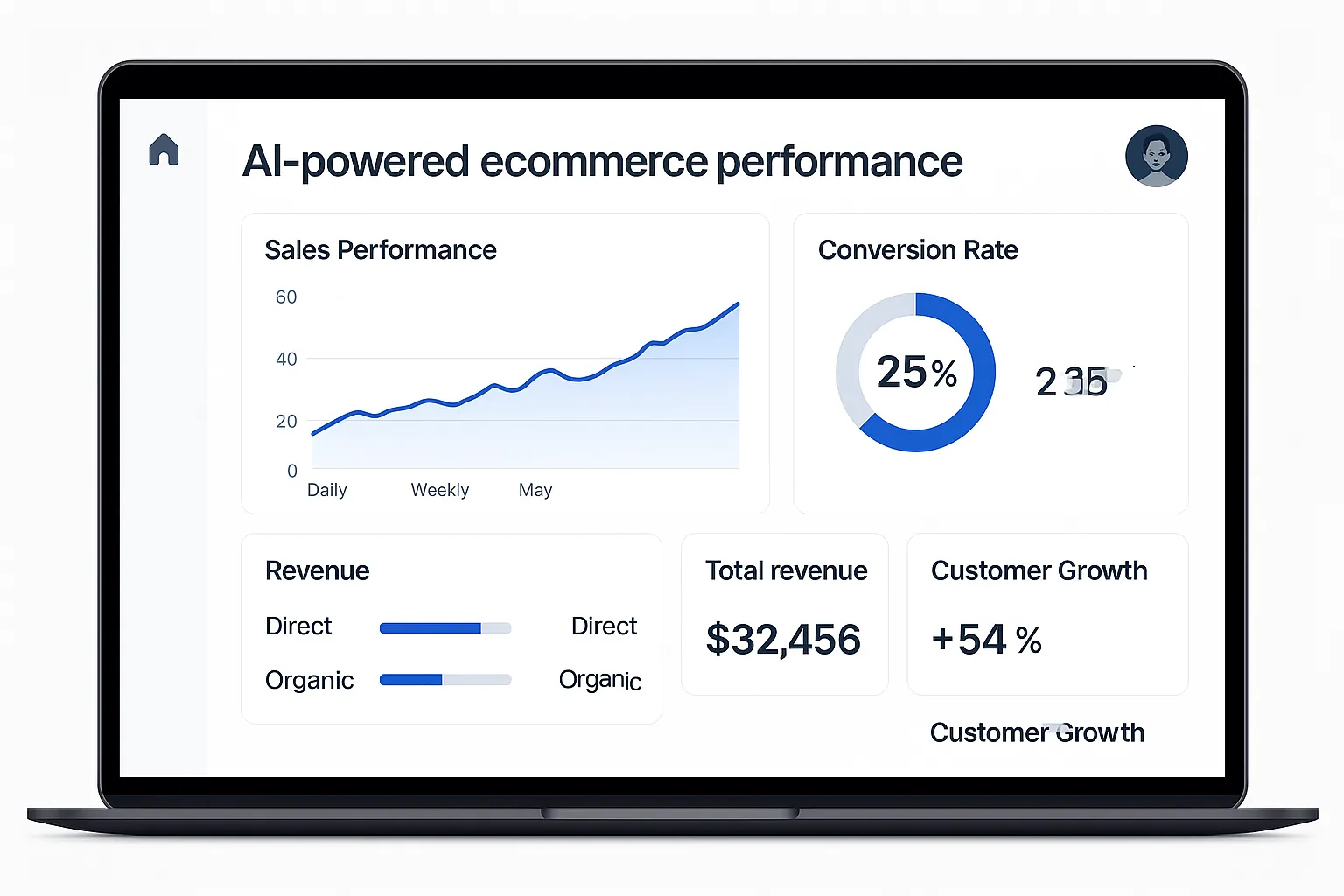
Live views on funnels, inventory risk, and cohort health—so leaders see what is working, what’s at risk, and what to change next.
Want to see what an AI layer could do for your store?
Share your store URL, key categories, traffic bands, and top 3 constraints. We’ll outline 2–3 concrete AI commerce plays you can roll out in the next 8–10 weeks— with expected impact on conversion and inventory.
Outcomes that matter to growth and finance.
Every engagement is tied to measurable metrics—conversion rate, revenue per visitor, stock-outs, and customer lifetime value—not just new dashboards.
Smarter recommendation logic, tuned search, and aligned offers across funnels.
Better forecasting and replenishment reduce lost sales and slow-moving stock.
Lifecycle journeys and personalised messaging that respect behaviour and margin.
How we engage with e-commerce and retail teams.
A rollout model that respects your running campaigns, catalog cycles, and logistics partners— without putting day-to-day revenue at risk.
- 01. Discovery & store mapping. We align with growth, merchandising, and ops to understand platforms, data sources, and constraints.
- 02. Architecture & pilot design. Together we pick a high-impact wedge—one funnel, one category, or a specific cohort.
- 03. Implementation & guardrails. We deploy behind your existing platforms with clear controls for marketing, merch, and ops teams.
- 04. Scale-up & continuous optimisation. Once impact is proven, we extend coverage to more funnels, categories, and channels.
Frequently Asked Questions
-
How can AI solutions improve our e-commerce performance? ▾
We use AI to improve discovery, conversion, inventory planning, and retention. That means more relevant product exposure, better stock availability, and journeys tuned to behaviour and margin instead of generic rule-sets.
-
What types of data do we need to get started? ▾
Typically: order history, product catalog data, inventory and fulfilment feeds, basic customer identifiers, and campaign performance. We start with what you already have and improve data quality over time.
-
How does AI handle seasonality, promotions, and sudden spikes? ▾
Models are trained with seasonal patterns, promotions, and external signals where relevant. We also keep human override and guardrails so commercial teams stay in control during key events.
-
Will this replace our current platforms like Shopify or WooCommerce? ▾
No. We build an AI layer on top of your existing store, ERP, CRM, and marketing stack. The goal is to extend what you already run—not force a platform migration.
-
How do you integrate with our tools and marketplaces? ▾
We use APIs, webhooks, and data exports to connect storefronts, ERPs, CRMs, marketing platforms, and, where needed, marketplace data—under a clear data contract.
-
What ROI timeline should we expect from an AI commerce layer? ▾
Most pilots are designed for measurable movement in 8–16 weeks on a defined set of metrics—typically revenue per visitor, stock-outs on key SKUs, or repeat rate for specific cohorts.
-
How do you handle data privacy and ethical use of AI in e-commerce? ▾
We minimise personally identifiable data, comply with regional regulations, and avoid opaque automation on critical decisions without human visibility and override. Access controls, logging, and retention policies are part of the design.